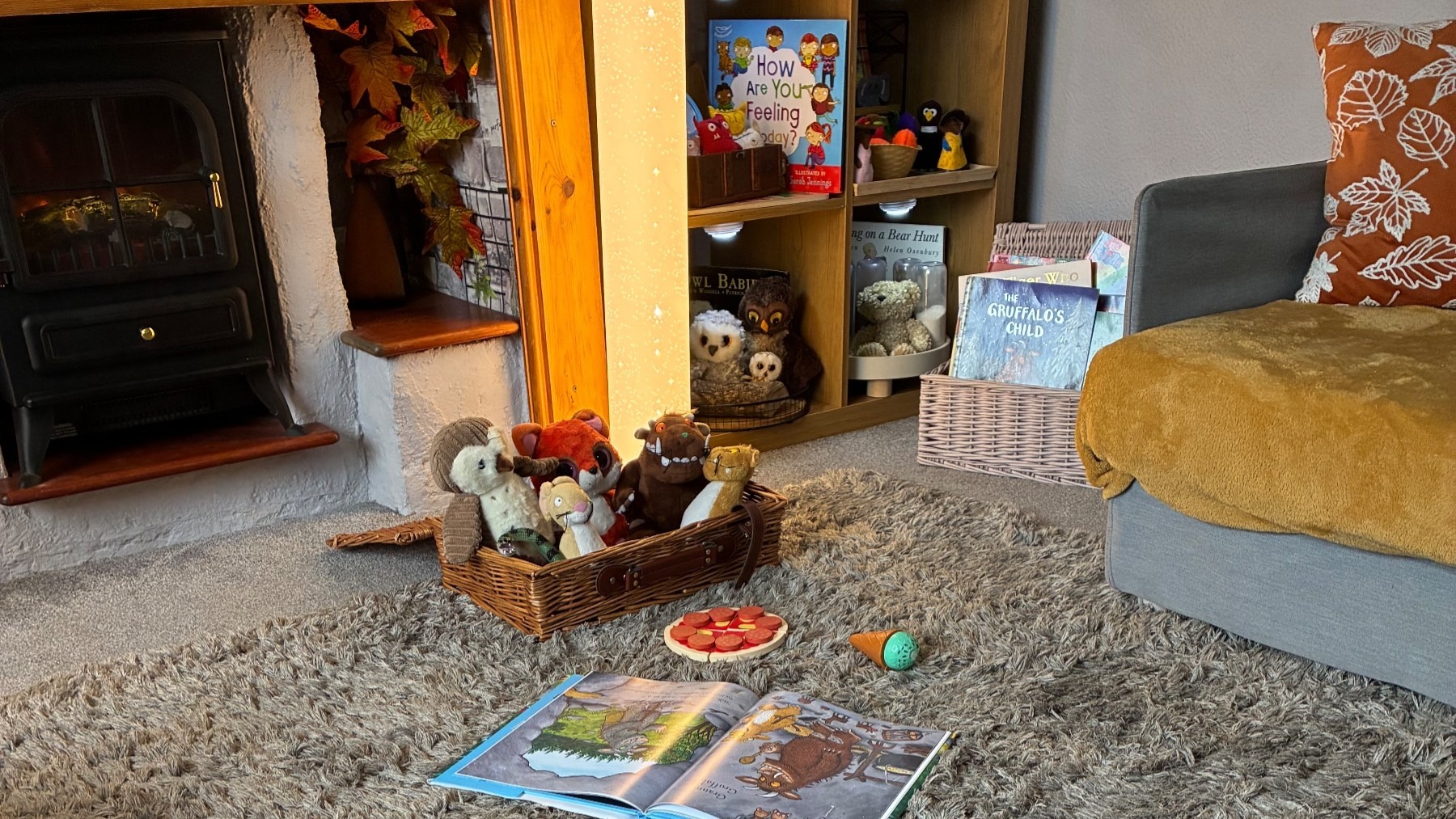
“Orange eyes,” a Little Explorer pointed out before I had even opened the front cover of our new book, Gruffalo Granny.
So I paused. We looked closely at the eyes on the cover, then used a mirror to look at our own. Nobody had orange eyes!
“What else can we find that’s orange?” I asked.
“Pumpkins!” called another Little Explorer, rushing off to pick one up. We found one big pumpkin and two small ones. We counted them, held them, carried them and decided that one felt very heavy.
“Cushions!” a two-year-old spotted next.
Swiftly followed by: “Leaves!”
There was a leaf pattern on our orange cushions. Following this interest, I picked up our toy Gruffalo snake to compare. He definitely didn’t have leaves, he had spots, just like the spotty socks we had noticed in our book 'Socks' last week!
I reached for a vase of flowers I happened to have on the windowsill. We noticed that the real leaves felt soft, like our cushions. Then we explored the pretend leaves on the lights around the fireplace. They felt hard, which one of our Little Explorers pointed out was just like the hard chair in the Goldilocks story we had shared last week.
As we returned to the book, we noticed that Gruffalo Granny and the Gruffalo’s Child had different coloured eyes from the Gruffalo. We looked at the children’s family photographs of grandparents, which we’ve been sharing as part of our All About Me activities. Soon we were talking about eyes and glasses again, as well as brothers and sisters, long hair and short hair, and the many similarities and differences between our families.
At the end of the story, the children were keen to play with the props. Of course we had to have a tea party with pretend pizza and ice cream! There was counting, sharing and taking turns, and the ice cream brought us back to our recent conversations about brushing our teeth.
Later, during free play, our Little Explorers decided to bring the Gruffalo characters into their building activity. They made a Gruffalo cave from building stones, followed by tunnels for the animals to travel through. When one got 'stuck', we returned to words that had been weaving through our play this term.
Read the earlier blog:
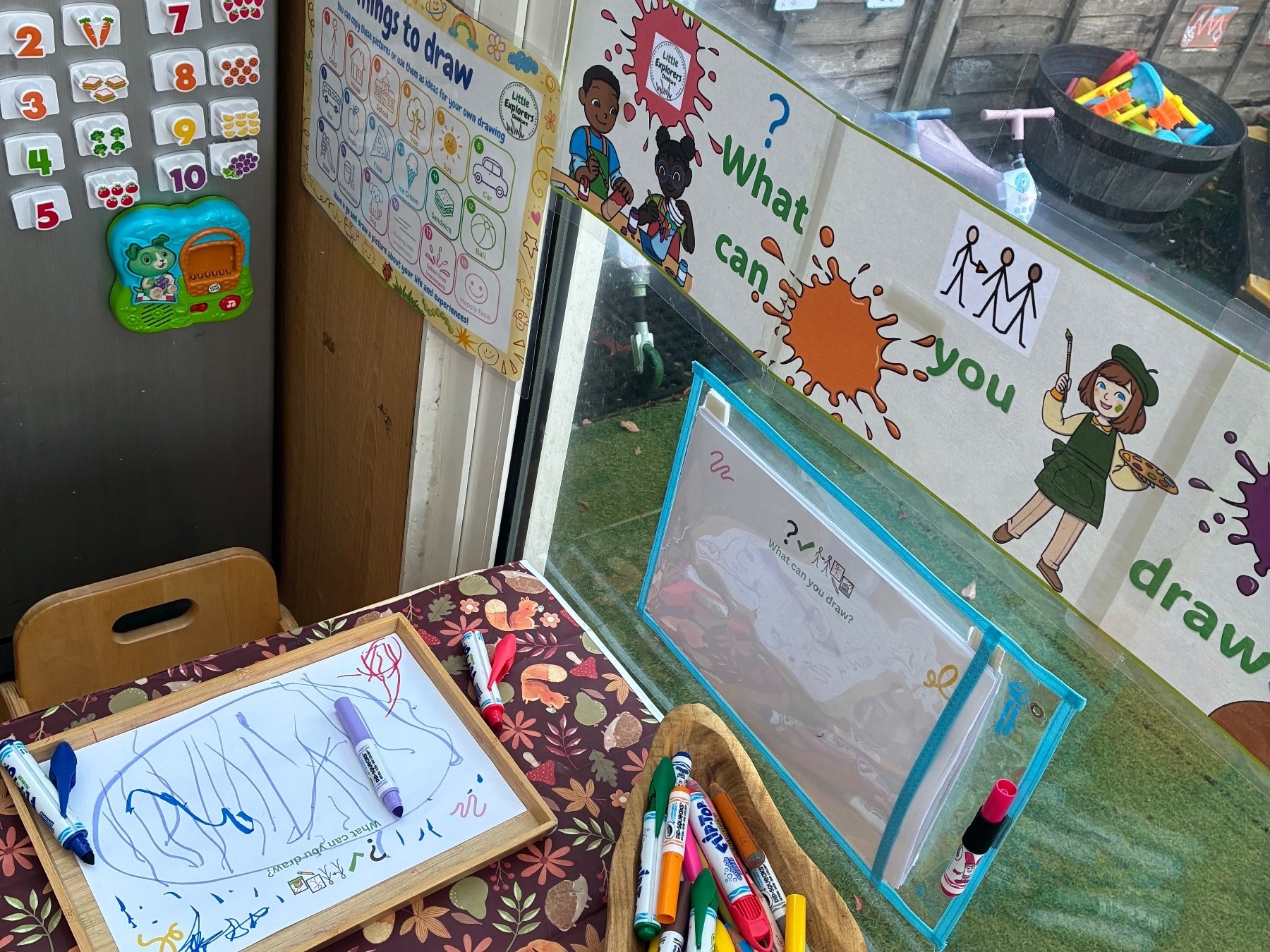
The pumpkins found their way to the creative table too. We drew our own pictures, and one pumpkin was blue because that was the colour the child chose. I demonstrated how we could use marks to show rain falling, then the children practised making their own lines and raindrops, returning to our recent interest in showing movement through drawing.
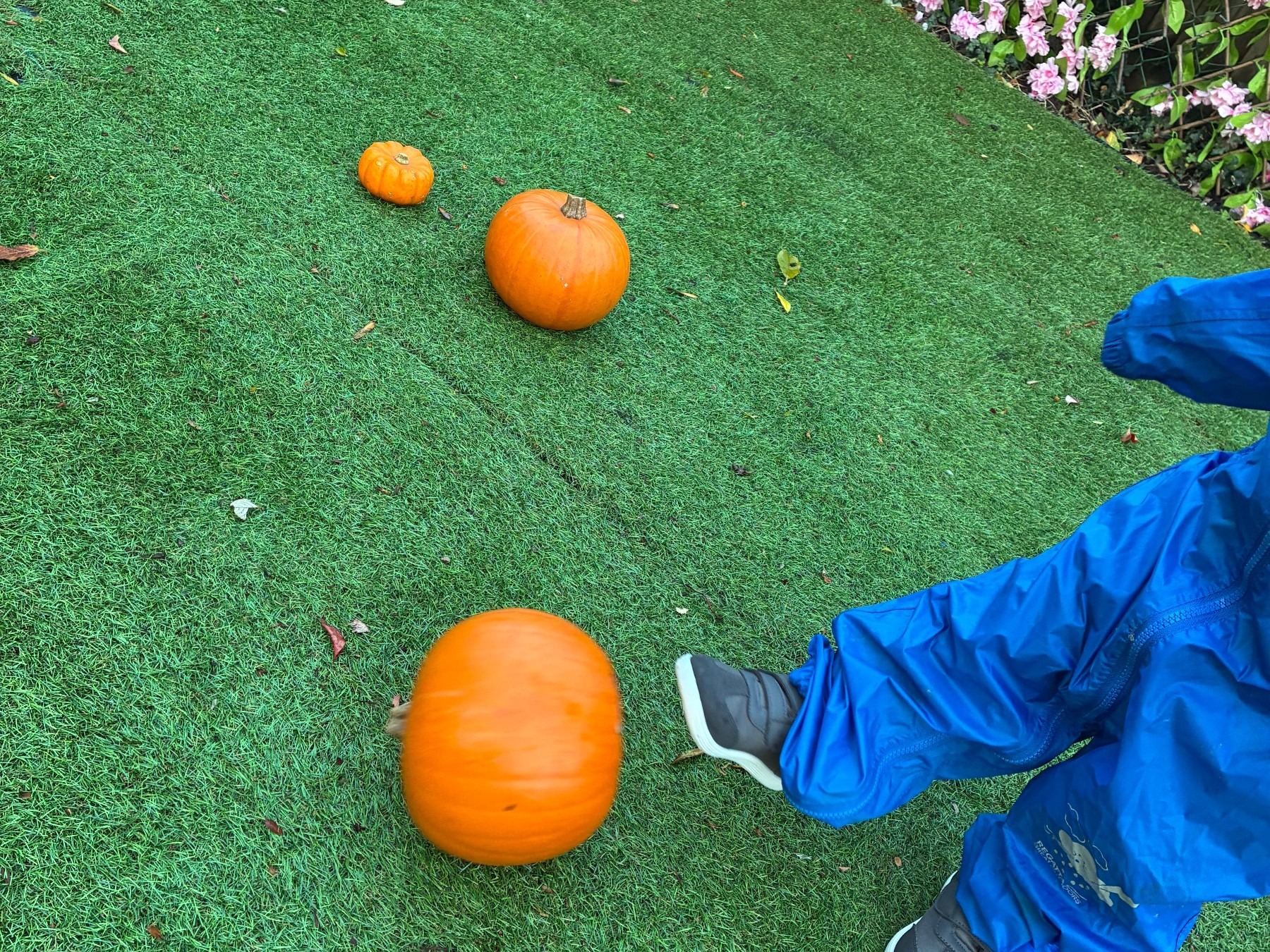
In the garden, a toddler decided that a pumpkin was a “football”. So, for a while, it was!
We hadn’t planned an orange hunt, a spotty snake or pumpkin football. It began with a child noticing something on a book cover and grew through the conversations and play that followed.
Comments
No comments yet — be the first!