
Jasper’s Beanstalk
At Little Explorers, a shared story often becomes the thread that holds the week together. This week, Jasper’s Beanstalk gave us a clear starting point for exploring growth and change. Through repeated reading, real bean seeds, drawing, counting, clay and conversation, the children kept returning to the same ideas: seeds, roots, shoots and growing. What mattered was not building lots of separate activities around the book, but giving children repeated, meaningful opportunities to meet the same learning in different ways.
When Repeated Reading Begins to Matter
Repeated reading of Jasper’s Beanstalk quickly gave the children a shared language for the week. By the end of it, some of the clearest signs of learning were not in finished products, but in what children could say and retell for themselves. Children as young as two were reading the story back to one another, asking their friends questions as we do, and naturally using words such as roots, shoots and seeds in their own talk. That felt important because the vocabulary was not simply being heard; it was beginning to stick.
Making Growth Visible
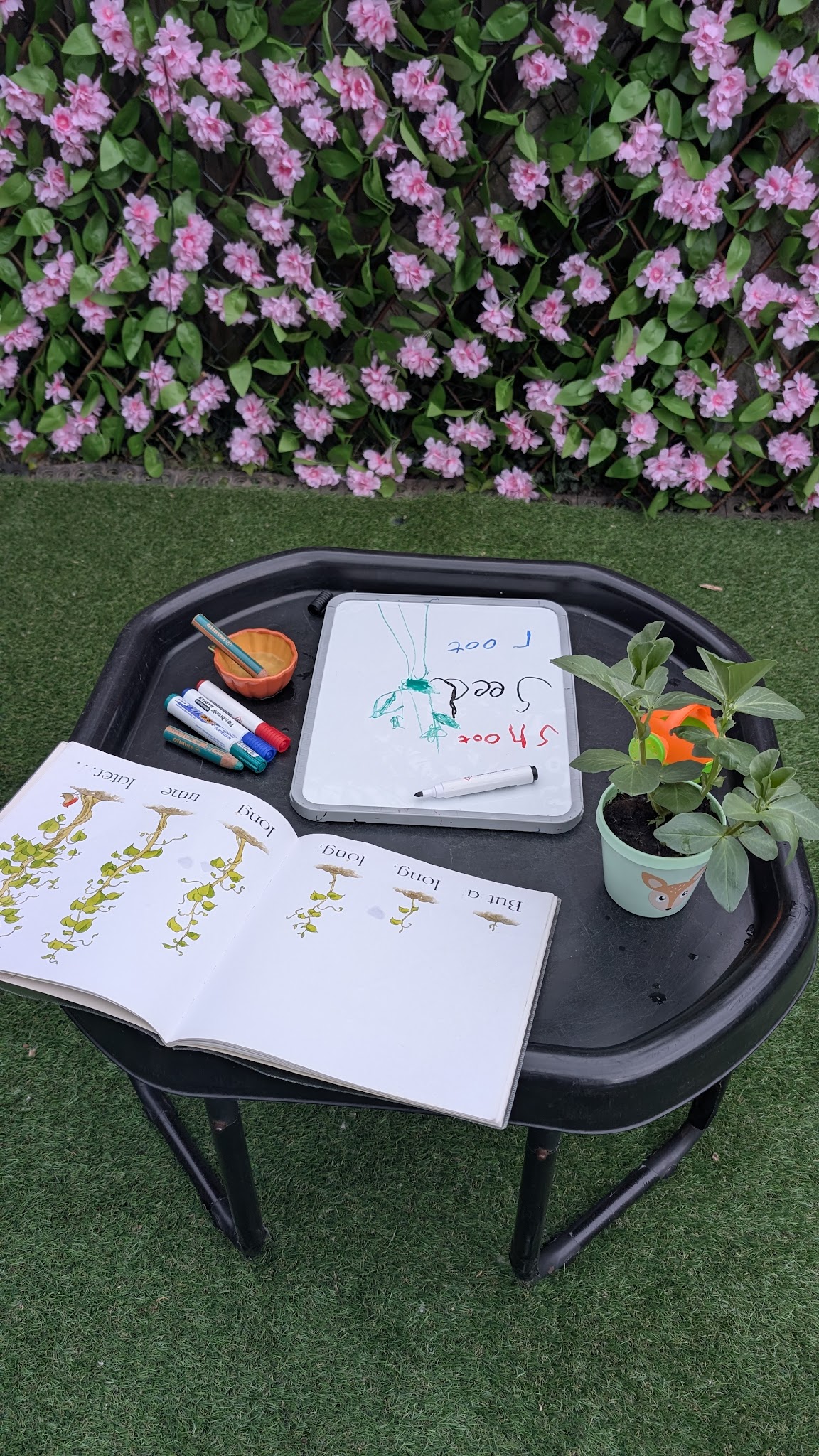
One of the most helpful things we introduced was a tray of part-grown bean seeds so the children could immediately examine real roots and shoots. This gave substance to the language in the story. We then moved into drawing, keeping it simple with paper and basic mark-making tools. After a brief model of drawing a beanstalk, children as young as one were making long lines and telling us they were drawing “long roots”. As the week continued, they returned to the same ideas through drawing, painting and collage, revisiting seeds, roots and shoots in different ways.
Writing With a Purpose
For some of the older children, this also led naturally into practising writing for a purpose. As they drew their beanstalks, they began attempting to label them with words such as seed, root and shoot. They were not completing a separate writing task, but using marks and early writing to communicate something meaningful. This gave us another clear sign that the learning was becoming secure enough to be used independently.
One Thread Opening Across the Week
Other links emerged naturally. When one child pointed out that Jasper was sad when the beanstalk had not grown, we followed that into a short conversation about feelings using our Colour Monster puppets. Younger children counted bean seeds into pots, while older children used the same seeds to revisit ‘more than’, and ‘fewer than’. The children were also fascinated by the worms in the story, which led to comparing size, sorting by colour and making simple patterns with our worm resources. None of this felt separate from the main thread; it all kept returning to the same shared ideas in slightly different ways.
Why Simple Resources Carried So Much
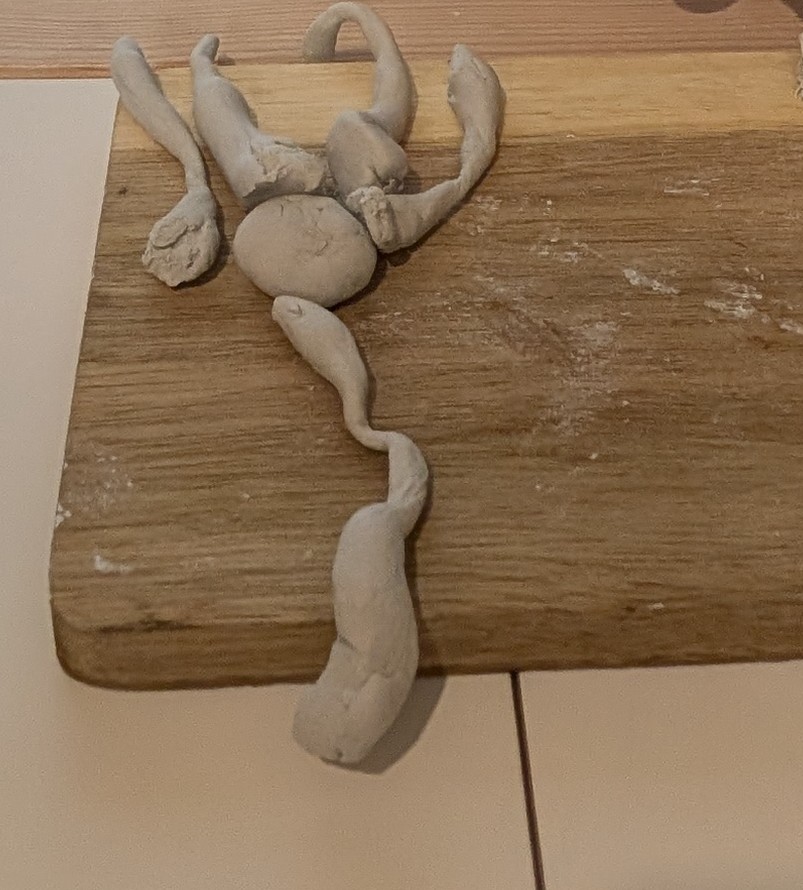
Expressive arts and design offered one of the clearest reminders that simple resources often work best. With nothing more than a lump of clay, the children stayed absorbed for almost an hour, shaping bean seeds, roots and shoots and revisiting what they had noticed in the real beans. The simplicity seemed to help the children stay with the learning, rather than pulling their attention in too many directions.
The same was true when children compared seeds from different fruits and vegetables, including avocado, mango, tomato, apple, pepper and tangerine. This widened their understanding of what seeds can look like while keeping the learning anchored in the same thread. The experience was simple, but it opened up rich opportunities for close observation, comparison and talk.
Extending the Thread into the Garden
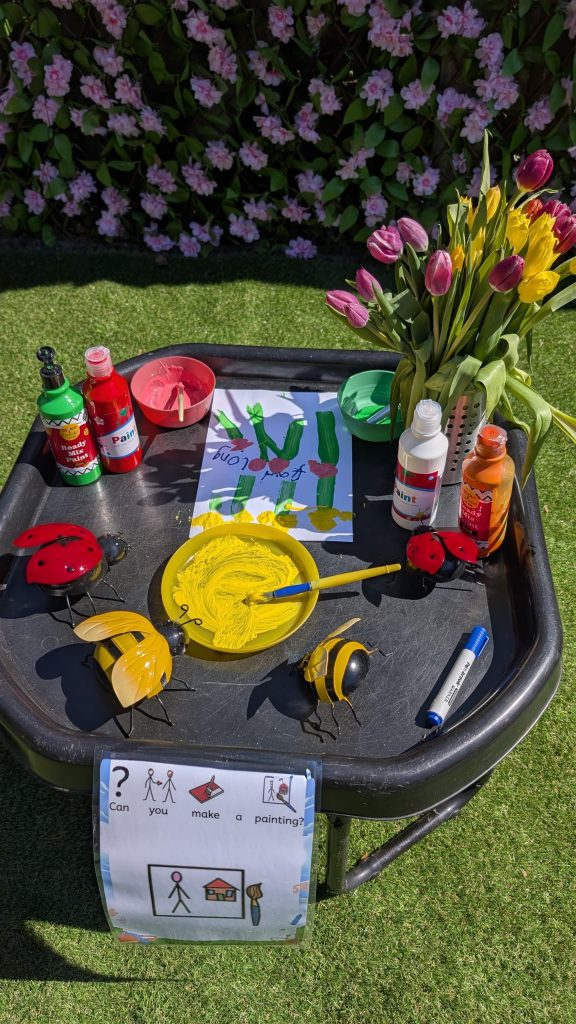
As the week continued, the growth thread moved naturally into the garden. The children looked closely at flowers and compared their long stems with the long roots and shoots we had already noticed in the beans. The flowers also opened up further exploration as children noticed the shadows they made on paper in the sunlight, experimented with colour mixing to make pink, and linked the repeated flower shapes back to recent maths work on doubling. Again, the learning grew from a simple setup, but the connections were rich and meaningful.
Thoughts for Practitioners
This week was a helpful reminder that a clear curriculum thread does not limit children’s learning; it strengthens it. When the main ideas remain visible, children can meet them through different materials, different ages can access them in different ways, and adults can respond flexibly without losing coherence. In practice, that often means doing less, but staying with it for longer.
What This Means for Practice
A well-chosen story, a small number of clear ideas and simple, repeated experiences can support rich learning across the curriculum without the need for constant activity changes or elaborate enhancements. When children are given meaningful opportunities to meet the same learning again and again, it becomes easier to see what they are beginning to understand, remember and use for themselves.